In the high-stakes arena of global energy finance, the difference between mediocre returns and market-leading performance often lies not in the assets selected, but in the architecture of the portfolio itself. For sovereign wealth funds, family offices, and institutional investors, the challenge is no longer simply accessing oil markets; it is constructing a resilient, multi-jurisdictional portfolio that can withstand geopolitical shocks, commodity cycles, and regulatory shifts while delivering consistent, risk-adjusted yield.
At OilNational Group, established in Washington, D.C. in 1989, we have spent over three decades refining the art and science of energy asset management. With a current portfolio exceeding $60 billion across 117+ countries, our approach transcends traditional private equity models. We do not merely aggregate assets; we engineer ecosystems where upstream production, midstream logistics, and downstream refining operate in symbiotic harmony to maximize cash flow and minimize volatility.
This analysis deconstructs the sophisticated methodologies employed by top-tier global energy investment companies to structure oil asset portfolios. We explore the critical balance between geographic diversification, value chain integration, and the emerging role of structured digital instruments like the OilNational Token ($ONT) in enhancing liquidity and operational efficiency. For the modern institutional investor, understanding these structural nuances is paramount to securing a dominant position in the global energy landscape.

The Architecture of Resilience: Core Principles of Portfolio Construction
The foundation of any robust oil asset portfolio is resilience. In an industry characterized by inherent volatility, the primary objective of structural design is to create a buffer against external shocks while maintaining exposure to upside potential. This requires a departure from siloed investment strategies toward a holistic, integrated approach.
Diversification Beyond Geography: While geographic spread is essential, true resilience comes from diversifying across political regimes, regulatory frameworks, and cost curves. OilNational Group’s presence in 117+ countries allows us to construct portfolios where assets in stable jurisdictions (e.g., North America, Europe) provide a defensive baseline, while high-growth emerging markets (e.g., Africa, Asia) offer alpha generation. This balance ensures that regional disruptions—whether political unrest in one continent or regulatory changes in another—do not compromise the entire portfolio’s performance.
Value Chain Integration: The most sophisticated oil and gas investment firms avoid over-concentration in any single segment of the value chain. Instead, they construct vertically integrated portfolios that capture margin at every stage: exploration, production, transportation, refining, and distribution. By owning assets across the spectrum, firms can internally hedge against price fluctuations. For instance, when crude prices fall, upstream margins may compress, but downstream refining margins often expand, stabilizing overall cash flow.
Liquidity Management: Traditional oil investments are notoriously illiquid, locking capital for decades. Modern portfolio structures must address this by incorporating mechanisms for liquidity without sacrificing long-term value. This is where innovative instruments like the OilNational Token ($ONT) play a pivotal role. As a structured digital investment representation, $ONT offers qualified investors a mechanism for streamlined settlement and potential secondary market interaction, bridging the gap between private asset stability and public market liquidity.
Strategic Allocation: Balancing Upstream, Midstream, and Downstream
The core of any energy portfolio lies in its allocation across the three primary sectors: Upstream, Midstream, and Downstream. Each sector offers distinct risk-return profiles, and the optimal mix depends on the investor’s specific objectives, risk tolerance, and time horizon.
Upstream: The Engine of Growth Upstream assets—exploration and production (E&P)—are the primary drivers of volume growth and leverage to oil prices. However, they also carry the highest operational and geological risk. Institutional portfolios typically allocate 40-50% to upstream, focusing on low-breakeven assets in stable jurisdictions. OilNational Group prioritizes mature basins with enhanced recovery potential and frontier regions with massive reserve upside. Our rigorous due diligence process ensures that every oil field investment opportunity meets strict criteria for reserve quality, cost structure, and political stability.
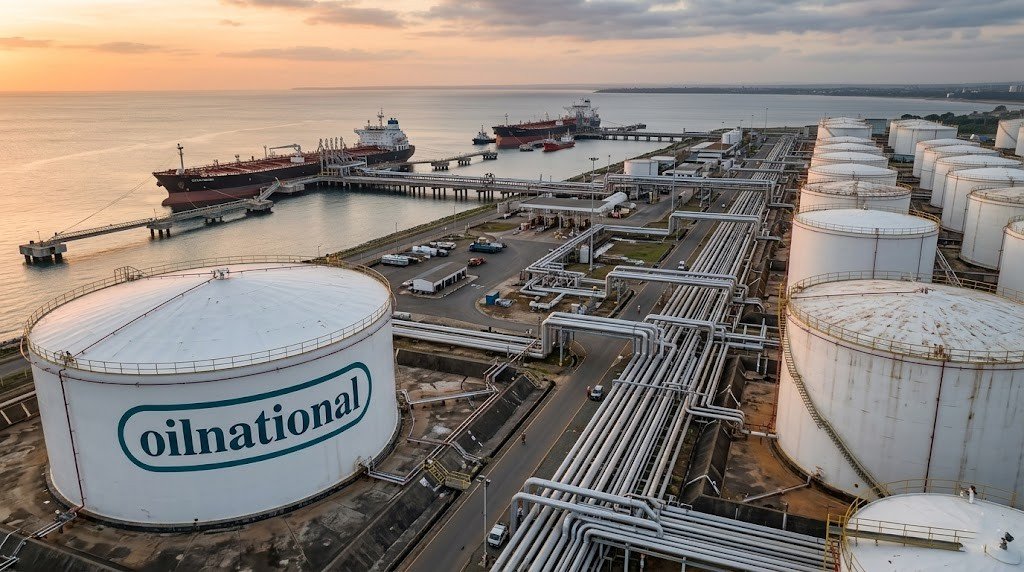
Midstream: The Anchor of Stability Midstream infrastructure—pipelines, storage terminals, and processing facilities—provides the defensive anchor of the portfolio. These assets generate fee-based revenue largely independent of commodity prices, offering predictable, bond-like cash flows. Allocating 30-40% to midstream energy infrastructure investments reduces overall portfolio volatility and provides a steady income stream to fund upstream exploration or distribute to investors. OilNational Group has aggressively expanded its midstream footprint, recognizing that controlling logistics is key to capturing value in constrained markets.
Downstream: The Margin Optimizer Downstream assets—refineries and petrochemical plants—offer exposure to the “crack spread” (the difference between crude costs and product prices). This sector acts as a natural hedge against upstream volatility. When crude prices are low, refining margins often widen, boosting profitability. A 20-30% allocation to downstream allows portfolios to capture value from market dislocations. Our oil trading and sourcing capabilities ensure that our refineries are fed with the most cost-effective feedstock, maximizing margins regardless of the benchmark crude price.
Geographic Strategy: Navigating Global Markets
Geography is destiny in the oil business. A well-structured portfolio must navigate the complexities of global markets, balancing access to resources with political risk and regulatory certainty.
North America: The Stable Core North America remains the bedrock of many institutional portfolios, offering deep liquidity, stable legal frameworks, and advanced technology. Here, the focus is on efficiency and consolidation. OilNational Group leverages its expertise to optimize production in mature basins like the Permian and Bakken, using advanced drilling techniques to lower break-even costs and extend asset life.
The Middle East: The Resource Powerhouse With the world’s largest proven reserves, the Middle East is indispensable for any serious global energy investment company. However, access often requires navigating complex state-owned enterprise structures. OilNational Group’s decades of diplomatic engagement and joint venture experience allow us to secure favorable terms in key jurisdictions, partnering with national oil companies to unlock value while respecting sovereign interests.
Africa and Asia: The Growth Frontier Emerging markets in Africa and Asia offer the highest growth potential but come with elevated risk profiles. Success here requires more than capital; it demands local knowledge, community engagement, and infrastructure development. OilNational Group’s on-the-ground presence in over 117 countries enables us to identify undervalued oil field investment opportunities and develop the necessary infrastructure to bring them to market. From the deep waters of West Africa to the demand centers of Southeast Asia, our strategy focuses on building long-term partnerships that align our success with local economic development.
Europe: The Transition Leader Europe presents a unique challenge and opportunity as it leads the global energy transition. Our European portfolio focuses on natural gas as a bridge fuel, carbon capture technologies, and optimizing existing assets for maximum efficiency while minimizing emissions. This approach ensures relevance and profitability in a rapidly evolving regulatory landscape.
Risk Mitigation Frameworks
Structuring a portfolio is only half the battle; managing risk is the other. Institutional investors employ a range of tools and strategies to mitigate exposure to various risks.
Hedging Strategies: Financial derivatives remain a crucial tool for managing price risk. However, unlike speculators, institutions use hedging to lock in margins and protect cash flows, not to bet on direction. OilNational Group employs sophisticated hedging programs tailored to each asset’s cost structure and production profile, ensuring downside protection without capping upside potential.
Operational Excellence: Operational risk—equipment failure, accidents, environmental incidents—can erode value quickly. Our energy asset management protocols prioritize safety, efficiency, and environmental stewardship. We invest heavily in predictive maintenance technologies and rigorous training programs to minimize downtime and prevent incidents.
Regulatory Compliance: The regulatory landscape is constantly shifting. Our dedicated compliance teams monitor developments in all 117+ countries where we operate, ensuring adherence to local laws and international standards. This proactive approach mitigates the risk of fines, sanctions, or operational shutdowns.
Geopolitical Insurance: In high-risk jurisdictions, we utilize political risk insurance and structure investments through bilateral investment treaties to protect against expropriation, currency inconvertibility, and political violence.

The Role of Digital Structuring in Modern Portfolios
The integration of digital technology is reshaping how energy portfolios are structured and managed. The OilNational Token ($ONT) exemplifies this evolution. Designed as a structured digital investment representation, $ONT is not a speculative cryptocurrency but a sophisticated instrument for institutional capital.
Enhancing Liquidity: One of the primary challenges in private oil investing is illiquidity. $ONT introduces a mechanism for streamlined settlement and potential secondary market interaction, allowing investors to manage their positions with greater flexibility. This does not mean turning oil into a day-trading asset; rather, it creates a more efficient marketplace for qualified investors to enter and exit positions.
Operational Efficiency: Blockchain technology underpins $ONT, offering transparency and immutability in transaction records. This reduces administrative overhead, minimizes disputes, and accelerates the settlement process. For a global energy investment company managing billions in assets across borders, these efficiency gains translate directly into improved net returns.
Access and Inclusivity: With a minimum investment threshold of $10,000, $ONT opens the door to a broader range of institutional and qualified investors who previously found the barriers to entry in direct oil investment too high. This democratization of access, while maintaining strict compliance and accreditation standards, expands the capital base available for energy development.
Conclusion: Engineering Value in a Complex World
Structuring an oil asset portfolio in the modern era requires a blend of traditional wisdom and innovative thinking. It demands a deep understanding of geology, geopolitics, finance, and technology. At OilNational Group, we have mastered this balance, leveraging our $60 billion portfolio and global presence to deliver superior outcomes for our partners.
By adhering to core principles of resilience, strategic allocation, and risk mitigation, and by embracing innovations like the OilNational Token ($ONT), we continue to set the standard for energy asset management. For institutional investors seeking to navigate the complexities of the global energy market, the path forward is clear: partner with a firm that understands not just the value of oil, but the architecture of value itself.
As we look to the future, the firms that thrive will be those that can adapt to changing markets while staying true to the fundamentals of asset ownership. OilNational Group stands ready to lead this charge, engineering portfolios that not only survive but thrive in the dynamic landscape of the global energy economy.