In the volatile theater of global energy markets, time is a dimension of value as critical as volume. The ability to store oil when supply exceeds demand and release it when scarcity strikes transforms a static commodity into a dynamic financial instrument. Oil storage is no longer merely a logistical necessity; it is a strategic asset class that generates yield through market dislocation. For the institutional investor, tank farms and floating storage units offer a unique opportunity to capture “contango” premiums, provide energy security buffers, and generate stable, fee-based cash flows that are largely uncorrelated with the directional price of crude.
At OilNational Group, our mastery of the storage sector has been a key differentiator since our founding in Washington, D.C. in 1989. Managing over $60 billion in assets across 117+ countries, we operate one of the world’s most flexible networks of onshore and offshore storage facilities. Our cumulative growth of 6000% is partly driven by our ability to monetize volatility, turning market chaos into predictable revenue. This analysis dissects the economics of oil storage, exploring how a global energy investment company leverages inventory management to trade volatility for yield.
We examine the mechanics of contango trading, the strategic value of floating storage regasification units (FSRUs) and tankers, and the critical role of storage in national energy security. In an era of supply chain fragility, owning the buffer is owning the advantage.
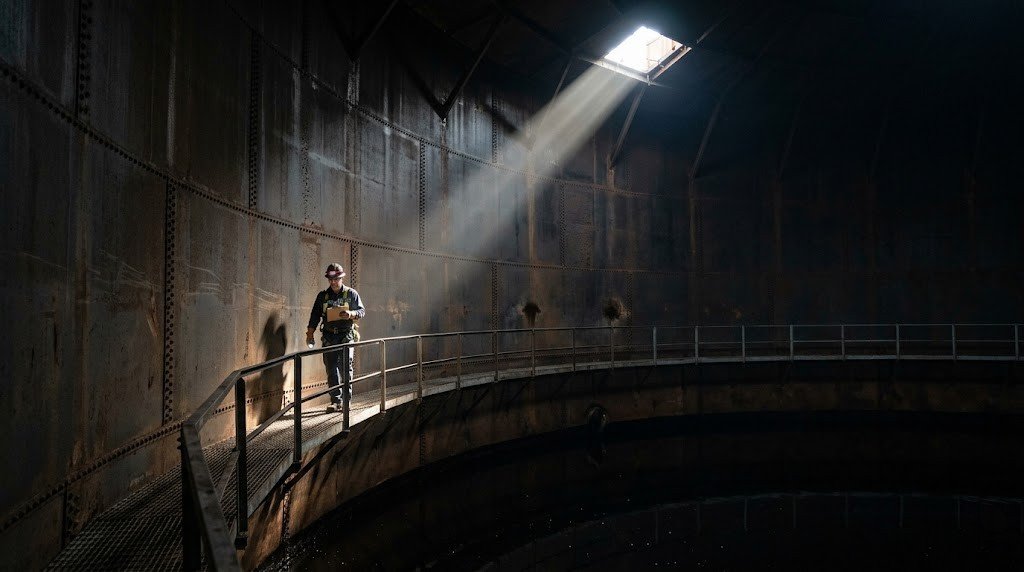
The Mechanics of Contango: Monetizing Time
The primary economic engine of oil storage is the market structure known as “contango.” This occurs when the future price of oil is higher than the current spot price. The difference between the two prices represents the market’s willingness to pay for delayed delivery.
The Arbitrage Strategy: When the market is in contango, an investor can buy physical oil at the low spot price, store it, and simultaneously sell a futures contract for delivery at a later date at the higher price. The profit is the spread between the futures price and the spot price, minus the cost of storage and financing.
- Example: If spot WTI is $70/barrel and the 6-month futures contract is $75, the gross spread is $5. If storage costs $0.50/barrel/month ($3 total) and financing costs $1, the net profit is $1 per barrel risk-free.
- Scale: For OilNational Group, with millions of barrels of available capacity, these spreads translate into hundreds of millions in annualized revenue during periods of steep contango.
Volatility as an Asset: Contango often widens during periods of oversupply or geopolitical uncertainty, such as the 2020 market crash or regional conflicts that disrupt flow. While producers suffer from low spot prices, storage owners thrive. Our oil trading and sourcing division actively monitors global curves, dynamically allocating storage capacity to the most lucrative arbitrage opportunities across our 117-country network.
Backwardation Management: In “backwardation” (where spot prices exceed futures), the incentive to store diminishes. However, even in these environments, storage provides value through optionality. Having inventory allows traders to meet immediate supply shortages, commanding a premium for prompt delivery. Furthermore, strategic reserves held during backwardation can be drawn down to feed refineries at high margins, capturing value through downstream integration.
Asset Classes: Onshore vs. Floating
OilNational Group deploys capital across two primary storage modalities, each with distinct risk-return profiles.
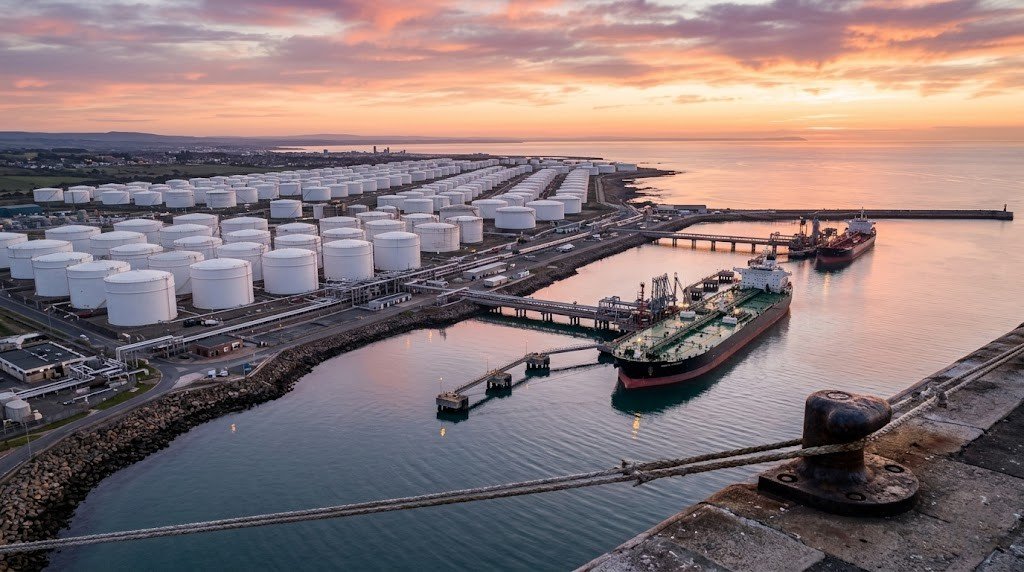
Onshore Tank Farms: These are large-scale facilities located at key hubs (e.g., Cushing, Rotterdam, Singapore).
- Advantages: Low operating costs, long asset life (50+ years), and ability to handle diverse crude grades. They serve as critical nodes for pipeline networks and refineries.
- Revenue Model: Primarily fee-based (leasing capacity) with optional trading upside. Contracts are often long-term (5-10 years), providing bond-like stability.
- Strategic Value: Onshore tanks are essential for national energy security, often leading to government backing or strategic reserves contracts.
Floating Storage (Tankers and FSRUs): Using Very Large Crude Carriers (VLCCs) or specialized Floating Storage and Offloading (FSO) units as floating tanks.
- Advantages: Mobility and speed. Floating storage can be deployed to where the arbitrage is widest within weeks, unlike onshore tanks which take years to permit and build.
- Revenue Model: Highly dynamic. Rates spike during contango events. We can move vessels from the Atlantic to the Pacific to capture regional dislocations.
- Flexibility: In extreme contango, floating storage rates can exceed $100,000 per day per vessel. OilNational Group maintains a fleet of leased and owned vessels specifically for this purpose, allowing us to pivot quickly as market structures shift.
Strategic Value: Beyond Arbitrage
While trading yields are attractive, the strategic importance of storage extends deeper into energy security and operational resilience.
Energy Security Buffers: Nations view storage as a critical defense against supply shocks. OilNational Group partners with governments to manage strategic petroleum reserves (SPRs). These contracts provide guaranteed, inflation-linked revenue streams that are immune to market cycles. Our facilities in Europe and Asia play a pivotal role in national security strategies, insulating allies from geopolitical coercion.
Supply Chain Smoothing: Refineries require steady feedstock flows, but production and shipping are often intermittent. Storage acts as a shock absorber, ensuring continuous refinery operations even when tankers are delayed or pipelines undergo maintenance. This reliability commands premium fees from downstream customers who cannot afford shutdowns.
Blending and Optimization: Storage terminals often serve as blending hubs, where different crude grades are mixed to create custom slates for specific refineries. This value-added service generates additional margin and deepens customer stickiness. Our energy asset management teams optimize these blends to maximize value for both producers and refiners.
Financial Engineering and Risk Management
Successfully trading storage requires sophisticated financial discipline. OilNational Group employs rigorous frameworks to maximize returns while managing exposure.
Hedging the Spread: We never speculate on the absolute direction of oil prices. Every barrel stored for arbitrage is fully hedged with offsetting futures contracts. This locks in the spread profit immediately upon entry, eliminating market risk. Our treasury team manages these hedges with precision, ensuring that margins are protected regardless of price crashes or spikes.
Optimizing Utilization: Storage assets generate revenue only when utilized. We use predictive analytics to forecast market structures and pre-book capacity during anticipated contango events. When the market is flat, we pivot to fee-based long-term contracts to ensure baseline utilization. This dynamic allocation maximizes the asset’s revenue potential over the cycle.
Financing Efficiency: Storage is capital intensive. We optimize our capital structure by using asset-backed lending, securitizing future cash flows, and leveraging tax-advantaged structures (like MLPs in the US). This lowers our cost of capital, widening the spread between arbitrage profits and financing costs. The OilNational Token ($ONT) also offers a novel avenue for raising efficient capital dedicated specifically to working inventory, potentially lowering funding costs further.
Case Study: The 2020 Contango Play
The market dislocation of April 2020 offers a definitive case study in storage economics. As demand collapsed and storage filled up, the WTI curve went into extreme contango, with futures months out trading $20 higher than spot.
The Opportunity: OilNational Group had preemptively secured long-term leases on 10 VLCCs and filled our onshore tanks in key hubs just before the crash.
The Execution: As spot prices plunged into negative territory, we bought physical cargo at rock-bottom prices, stored it on our ships and in our tanks, and sold the forward contracts at the elevated futures prices. Simultaneously, we leased out our remaining spare capacity to third parties at record daily rates.
The Result: While the broader market panicked, our storage division generated over $500 million in pure arbitrage and rental profit in a single quarter. This windfall not only offset losses in other parts of the portfolio but provided the liquidity to acquire distressed upstream assets at the bottom of the cycle. This event underscored the vital role of storage as a stabilizer and profit center in a volatile world.

The Future of Storage: Integration and Innovation
As the energy landscape evolves, so too does the role of storage.
Hydrogen and Ammonia: Existing infrastructure can potentially be repurposed for storing hydrogen or ammonia, the fuels of the future. OilNational Group is investigating the feasibility of converting select tanks for these new commodities, future-proofing our assets.
Digital Twins and Automation: We are implementing digital twin technology to monitor tank levels, temperatures, and integrity in real time. Automated valves and robotic inspection drones reduce operational costs and enhance safety, ensuring maximum uptime during critical trading windows.
Carbon-Neutral Storage: We are integrating solar power and electrified pumping systems to reduce the carbon footprint of our storage operations. This aligns with the growing demand for “green” storage solutions from environmentally conscious counterparties.
Conclusion: The Value of Patience
In the frenetic world of energy trading, storage represents the power of patience. It allows investors to decouple value creation from price direction, profiting instead from the structure of time itself. For OilNational Group, storage is not just a sideline; it is a core competency that has delivered outsized returns and strategic resilience for decades.
Our global network of tanks and vessels serves as a shock absorber for the market and a profit engine for our partners. By mastering the economics of contango and maintaining the flexibility to adapt to shifting market structures, we turn volatility into a predictable yield stream. As the world grapples with energy insecurity and market fluctuations, the value of reliable, strategic storage will only continue to rise. For the institutional investor, owning the buffer is the ultimate hedge—and the smartest trade of all.