In the traditional energy investment playbook, the end of an asset’s life is viewed solely as a cost center—a looming liability known as decommissioning. When a well or platform ceases production, the operator faces the massive expense of plugging wells, removing infrastructure, and restoring the site. For many majors and independent producers, these future liabilities (often ranging from tens to hundreds of millions per asset) act as a drag on balance sheets, discouraging investment in mature basins. However, for the sophisticated institutional investor, this perceived burden represents a hidden arbitrage opportunity. By acquiring assets nearing the end of their commercial life at deep discounts and applying specialized technical expertise to optimize the decommissioning process, firms can unlock significant value through cost avoidance, residual resource recovery, and infrastructure repurposing.
At OilNational Group, our approach to asset lifecycle management has evolved from simple operation to strategic optimization of the entire value chain, including the “end game.” Since our founding in Washington, D.C. in 1989, we have managed over $60 billion in assets across 117+ countries. We have pioneered a model where decommissioning is not a closure but a transformation phase. Our cumulative growth of 6000% includes substantial returns generated from acquiring distressed late-life assets, executing efficient abandonment programs, and repurposing infrastructure for the new energy economy. This analysis explores the economics of decommissioning liabilities, detailing how a global energy investment company turns a final cost into a final profit center.
We examine the mechanics of liability transfer, the potential for “tail-end” production enhancement, and the emerging market for repurposing oil and gas infrastructure for carbon capture and hydrogen. In a world focused on sustainability, the ability to responsibly and profitably close or convert an asset is a critical competitive advantage.
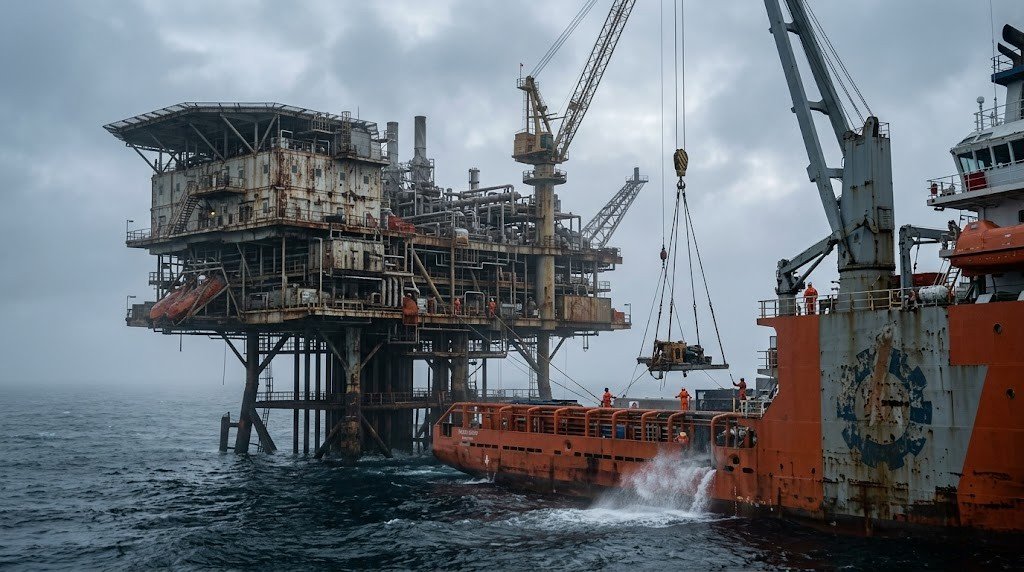
The Economics of Late-Life Assets
The investment thesis for late-life assets is grounded in the discrepancy between an operator’s view of liability and a specialist’s view of optionality.
Acquisition at Distressed Valuations: Major oil companies often seek to divest mature assets to clean up their balance sheets and focus on core growth regions. They are willing to sell these assets for nominal fees or even pay a buyer to take them (via negative purchase prices) to offload the decommissioning liability. For OilNational Group, this means acquiring producing cash-flowing assets for pennies on the dollar. Even a short period of continued production can yield multiples on the initial capital outlay.
Optimizing Abandonment Costs: The primary risk in these deals is the cost of decommissioning. Traditional operators often overestimate these costs due to conservative engineering assumptions and high internal overhead. OilNational Group employs specialized decommissioning teams that utilize innovative techniques (e.g., single-trip plug and abandon tools, reefing programs) to reduce costs by 30-50% compared to industry averages. This cost arbitrage directly flows to the bottom line, turning a projected loss into a profit.
Tail-End Production Enhancement: Before abandonment, there is often still oil left in the ground. By applying low-capital enhanced oil recovery (EOR) techniques and optimizing artificial lift, we can extend the economic life of the asset by several years. This “tail-end” production generates pure free cash flow since the initial acquisition cost is already sunk. In many cases, this incremental production fully funds the eventual decommissioning bill, leaving the residual value as pure profit.
Strategic Pathways: Plug, Leave, or Repurpose
Decommissioning is no longer a binary choice of “remove everything.” Regulatory frameworks and market dynamics now offer multiple pathways, each with distinct economic implications.
Rigs-to-Reefs: In jurisdictions like the Gulf of Mexico and parts of Southeast Asia, regulations allow for the conversion of obsolete platforms into artificial reefs. Instead of paying millions to completely remove a structure, the operator pays a fraction of that cost to clean and topple the jacket, creating a marine habitat.
- Economic Benefit: The savings on removal costs are shared between the operator and the government (or retained as profit). OilNational Group has successfully executed numerous rigs-to-reefs projects, turning a $50 million liability into a $5 million expenditure, capturing the $45 million difference as value.
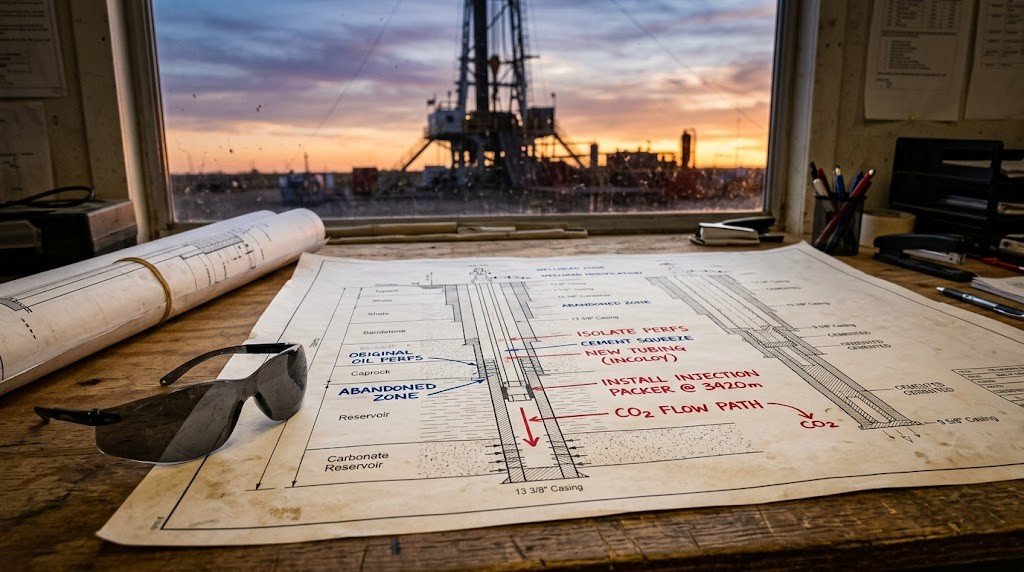
Infrastructure Repurposing: This is the most transformative trend. Existing pipelines, platforms, and wells can be repurposed for carbon capture and storage (CCS), hydrogen transport, or geothermal energy.
- CCS Hubs: Depleted reservoirs are ideal for storing CO2. Existing wells can be converted into injection wells, and pipelines can transport captured carbon. This transforms a liability into a revenue-generating asset eligible for tax credits (e.g., 45Q in the US).
- Hydrogen Transport: Natural gas pipelines can often be retrofitted to transport hydrogen, leveraging existing rights-of-way and infrastructure to serve the emerging hydrogen economy.
- Geothermal: Hot, dry holes can be converted into geothermal power generators, providing baseload renewable energy.
Complete Removal: In some cases, full removal is mandatory. Here, our strategy focuses on efficiency. We bundle multiple decommissioning projects to achieve economies of scale, negotiate bulk rates with service contractors, and recycle steel and materials to offset costs. Our energy asset management protocols ensure that every ton of steel is accounted for and sold to recyclers at peak market prices.
Navigating Regulatory and Environmental Risks
Decommissioning is heavily regulated, and missteps can lead to massive fines and reputational damage. OilNational Group navigates this landscape with precision.
Regulatory Compliance: We maintain dedicated teams in every jurisdiction to monitor evolving decommissioning regulations. From the OSPAR convention in the North Sea to BSEE rules in the Gulf of Mexico, we ensure full compliance to avoid penalties. We engage proactively with regulators to secure approvals for alternative solutions like rigs-to-reefs or repurposing, often setting precedents that benefit the wider industry.
Environmental Stewardship: Responsible decommissioning is critical for maintaining our social license to operate. We conduct rigorous environmental impact assessments, ensuring that seabed restoration meets or exceeds original conditions. Our commitment to sustainability extends to the recycling process, where we aim for near-100% material recovery, minimizing waste sent to landfills.
Liability Management: We structure acquisitions to clearly define the transfer of liability. Through indemnities, escrow accounts, and surety bonds, we ensure that legacy issues from previous owners do not become our burden. Our legal team specializes in crafting agreements that protect our investors from unforeseen environmental claims.
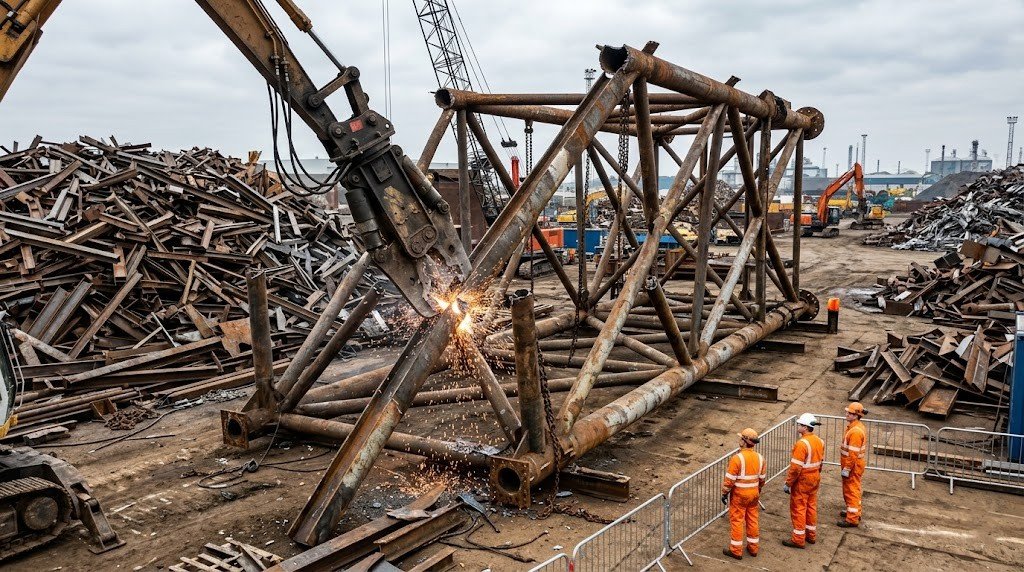
Financial Structuring of Decommissioning Funds
Managing the financial aspect of decommissioning is as crucial as the technical execution.
Decommissioning Trusts: We establish fully funded decommissioning trusts early in the asset’s life, segregating capital specifically for abandonment activities. This ensures that funds are available when needed and protects against corporate insolvency. Our treasury team manages these trusts to generate yield while preserving capital, offsetting inflationary pressures on future costs.
Tax Efficiency: Decommissioning expenditures are often tax-deductible. We structure our projects to maximize these deductions, utilizing them to offset taxable income from other operations. In some jurisdictions, accelerated depreciation allowances for decommissioning activities provide immediate cash flow benefits.
Monetizing Carbon Credits: When repurposing assets for CCS, the sequestered carbon generates valuable tax credits and carbon offsets. OilNational Group quantifies these benefits upfront, factoring them into the investment model. The OilNational Token ($ONT) can be used to track and trade these carbon credits, providing liquidity and transparency to the environmental value created.
Case Study: The Southern North Sea Transition
A prime example of our strategy is the acquisition of a cluster of late-life gas fields in the Southern North Sea in 2022. The previous operator, a major European supermajor, was seeking to exit the basin to focus on renewables, viewing the assets as a liability due to impending decommissioning deadlines.
The Challenge: The fields were declining rapidly, and the estimated cost to decommission the three platforms and associated pipelines was £400 million. The seller was offering the assets for £1 but required the buyer to assume the full liability.
The Solution: OilNational Group acquired the assets and immediately implemented a three-pronged strategy:
- Tail-End Optimization: We installed low-cost compression units, extending field life by 5 years and generating £150 million in additional cash flow.
- Repurposing Feasibility: We initiated a study to convert the platforms and pipelines into a regional CO2 storage hub, securing a government grant to fund the frontend engineering design (FEED).
- Cost Reduction: We negotiated a bundled decommissioning contract for the eventual removal of non-repurposable elements, reducing the estimated cost by 35%.
The Outcome: Five years later, the assets are still producing, covering all operating costs and contributing to profit. The CO2 hub project has received final investment approval, transforming the site into a net-zero engine. What was once a £400 million liability is now a profitable, sustainable asset with a 20-year future. This turnaround exemplifies the power of viewing decommissioning as an opportunity rather than an end.
The Future of Asset Lifecycle Management
As the energy transition accelerates, the decommissioning market will grow exponentially. Trillions of dollars in liabilities will come due over the next three decades.
Industrial Symbiosis: We envision a future where decommissioned oil fields become hubs for multiple energy industries—wind farms powering electrified platforms, CO2 stored in depleted reservoirs, and hydrogen produced via electrolysis using offshore wind. OilNational Group is positioning itself as the integrator of these systems, leveraging our existing infrastructure and expertise to lead the transition.
Technology-Driven Efficiency: Advancements in robotics, AI, and materials science will further reduce decommissioning costs. Autonomous underwater vehicles (AUVs) can inspect and cut structures more cheaply than divers, while new plugging materials offer longer-lasting seals at lower costs. We are actively investing in these technologies to maintain our cost advantage.
Conclusion: Turning the Page Profitably
Decommissioning is not the end of the story; it is the final chapter where value can be made or lost. For the unprepared, it is a costly burden. For the strategic investor like OilNational Group, it is a source of alpha. By acquiring late-life assets at distressed prices, optimizing tail-end production, and repurposing infrastructure for the low-carbon future, we turn liabilities into legacies.
Our $60 billion portfolio includes numerous success stories where “dead” assets were revived or transformed, delivering superior returns and environmental benefits. As the industry matures, the ability to manage the end-of-life phase efficiently will become a defining competency. OilNational Group stands ready to lead this space, proving that even in decline, there is opportunity. For institutional investors, the message is clear: do not fear the liability; master the transition. With the right expertise and vision, the end of one era is simply the beginning of another.