The global energy landscape has witnessed a seismic shift in the valuation of downstream assets. For decades, the investment narrative favored upstream exploration, viewing refineries as low-margin, cyclical commodities businesses vulnerable to environmental regulation. However, recent geopolitical shocks and supply chain disruptions have exposed a critical vulnerability: the world is facing a structural deficit in refining capacity. As major economies retire older, inefficient plants and few new complexes are built, the ability to convert crude oil into usable fuels (diesel, jet fuel, gasoline) has become a matter of national security. For the institutional investor, this dislocation creates a compelling opportunity. Investing in complex, high-efficiency refineries is no longer just about capturing crack spreads; it is about owning the essential choke points of the global energy supply chain.
At OilNational Group, our strategic foresight led us to accumulate and upgrade critical refining assets well before the current crisis materialized. Since our founding in Washington, D.C. in 1989, we have managed over $60 billion in assets across 117+ countries. Our downstream portfolio now stands as a fortress of resilience, capable of processing diverse crude slates to meet specific regional demands. Our cumulative growth of 6000% reflects the immense value created by securing these scarce conversion assets. This analysis explores the economics of refining capacity, detailing why complex refineries are becoming strategic national assets and how a global energy investment company leverages them to generate superior, defensive yields.
We examine the divergence between simple and complex refining margins, the geopolitical premium on fuel security, and the role of technology in future-proofing these massive industrial engines. In a world where fuel shortages can halt economies, the refinery is the ultimate strategic asset.
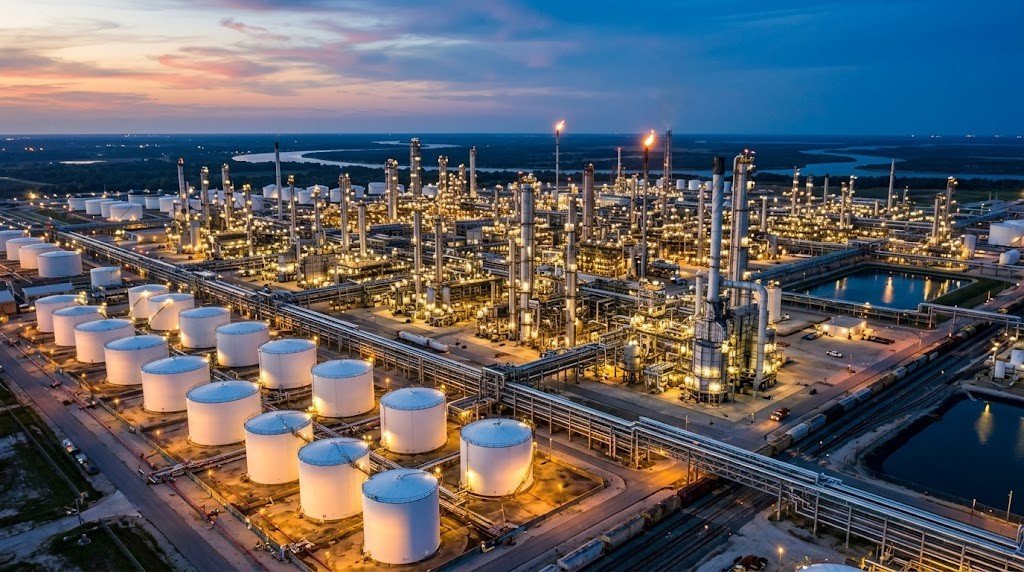
The Structural Deficit in Global Refining
The current investment thesis for refining is driven by a simple supply-demand imbalance that will persist for years.
Capacity Attrition: Over the past decade, refining capacity in OECD nations (particularly Europe and North America) has shrunk significantly. Older, simple refineries unable to meet stringent environmental standards or compete with low-cost giants have been permanently closed. Furthermore, the energy transition narrative has deterred new greenfield investments, with major banks and investors shunning fossil fuel infrastructure. This “capital strike” has created a supply vacuum.
Demand Resilience: Despite the rise of electric vehicles, global demand for refined products remains robust. Petrochemical feedstocks, aviation fuel, heavy trucking diesel, and marine bunker fuel continue to see growth, particularly in emerging markets in Asia and Africa. The International Energy Agency (IEA) projects that even in aggressive transition scenarios, global oil demand will remain near record highs through 2030. With supply shrinking and demand holding steady, the utilization rates and margins for remaining refineries are poised to surge.
The Complexity Premium: Not all refineries are created equal. The market is bifurcated between “simple” refineries (which can only process light, sweet crude) and “complex” refineries (equipped with cokers and hydro-crackers to process heavy, sour crude).
- Simple Refineries: Vulnerable to competition and limited by crude availability.
- Complex Refineries: Can buy the cheapest, heaviest crudes (often discounted due to geopolitical sanctions or quality issues) and convert them into high-value products. This flexibility allows them to capture massive “crack spreads” (the difference between input cost and output value). OilNational Group’s portfolio is heavily weighted toward these complex assets, providing a natural hedge against crude price volatility and a generator of alpha.
Geopolitics and Energy Security
The war in Ukraine and subsequent sanctions on Russian energy flows fundamentally altered the global trade map. Europe, once reliant on Russian diesel, scrambled to source cargoes from the Middle East, India, and the US. This reshuffling highlighted the strategic value of having domestic or allied refining capacity.
National Security Assets: Governments now view refineries as critical infrastructure akin to power grids or telecommunications. Nations with insufficient refining capacity face the risk of fuel shortages, which can lead to social unrest and economic paralysis. Consequently, governments are offering incentives, tax breaks, and even direct equity support to keep strategic refineries operational and to encourage upgrades. OilNational Group leverages this geopolitical imperative, positioning our assets as partners in national security, which secures favorable regulatory treatment and long-term off-take agreements.
Sanctions Arbitrage: Global sanctions on various oil-producing nations create pockets of discounted crude. Complex refineries owned by OilNational Group in non-sanctioned jurisdictions can legally purchase these discounted barrels, process them, and sell the refined products at global benchmark prices. This arbitrage capability generates exceptional margins that simple refineries cannot access. Our oil trading and sourcing division works in tandem with our refining operations to optimize feedstock selection, ensuring we always run the most economical slate available.
Investment Strategy: Upgrading and Optimization
Investing in refining today is not about building new greenfield megaprojects (which are too costly and risky) but about acquiring and upgrading existing brownfield sites.
Acquisition of Distressed Assets: Many majors are looking to exit downstream operations to focus on chemicals or renewables. This creates a buyer’s market for high-quality assets. OilNational Group actively acquires these divested refineries at attractive valuations, often from sellers eager to clean up their balance sheets.
Debottlenecking and Efficiency: Post-acquisition, we deploy capital to “debottleneck” facilities—making small technical adjustments that increase throughput without major construction. We also integrate advanced process control systems and AI-driven optimization tools to maximize yield and energy efficiency. These improvements often pay for themselves within 12-18 months through increased production and lower operating costs.
Flexibility and Integration: We prioritize assets that are integrated with pipelines and terminals, ensuring reliable feedstock supply and product distribution. Flexibility is key; our refineries are designed to switch between different crude grades and product slates based on market signals. This agility allows us to pivot quickly when market dynamics shift, capturing value where rigid competitors cannot.

The Role of Technology and Sustainability
The future of refining lies in becoming cleaner and more efficient. OilNational Group is leading this transformation to ensure our assets remain viable and profitable in a lower-carbon world.
Carbon Capture and Storage (CCS): Refineries are significant emitters, making them prime candidates for CCS. We are retrofitting our largest facilities with carbon capture units, trapping CO2 from flue gases for sequestration or utilization. This not only reduces our carbon footprint but also unlocks government subsidies and carbon credits, improving project economics.
Bio-Refining Integration: Many of our refineries are being modified to co-process bio-feedstocks (like used cooking oil or animal fats) alongside conventional crude. This allows us to produce renewable diesel and sustainable aviation fuel (SAF), which command significant premiums in markets with low-carbon mandates (like California’s LCFS or Europe’s ReFuelEU). This diversification hedges against long-term fossil fuel demand risks.
Digital Twins and AI: We utilize digital twin technology to simulate refinery operations in real time. AI algorithms analyze thousands of variables to optimize combustion, reduce energy consumption, and predict maintenance needs. This digital layer ensures our refineries operate at peak efficiency, minimizing downtime and maximizing margin.
Risk Management in Downstream Investments
While the outlook is positive, refining investments carry specific risks that must be managed.
Regulatory Risk: Environmental regulations are tightening globally. We mitigate this by proactively investing in compliance technologies (scrubbers, sulfur recovery units) and engaging with policymakers to shape sensible transition frameworks. Our goal is to be ahead of the curve, turning regulatory compliance into a competitive moat.
Margin Volatility: Crack spreads can be volatile. We manage this through hedging strategies, locking in margins for a portion of our production using futures and swaps. Additionally, our geographic diversification ensures that weak margins in one region are offset by strength in another.
Transition Risk: As EV adoption grows, gasoline demand may eventually decline. We address this by focusing on products with longer growth runways (diesel, jet fuel, petrochemicals) and by investing in bio-refining capabilities. Our strategy is to evolve the refinery from a pure fuel producer to a multi-product energy hub.
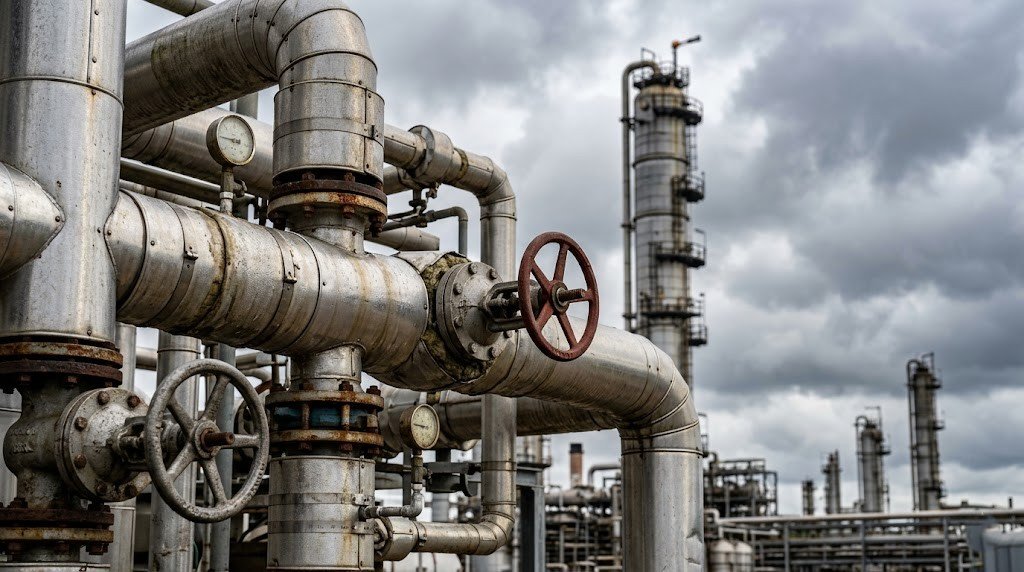
Case Study: The European Turnaround
In 2021, OilNational Group acquired a struggling refinery in Northern Europe that was slated for closure by its previous owner due to poor margins and high emissions.
The Challenge: The refinery was configured for light sweet crude, which had become expensive and scarce. It lacked the complexity to process cheaper heavy sour grades, and its emissions profile threatened regulatory shutdown.
The Solution: We invested $500 million in a turnaround program:
- Complexity Upgrade: Installed a delayed coker unit and hydro-cracker, enabling the processing of heavy sour crude from diverse global sources.
- Bio-Integration: Modified units to co-process 20% bio-feedstocks, producing renewable diesel for the premium European market.
- Efficiency: Deployed AI-driven process control to reduce energy consumption by 15%.
The Outcome: Within two years, the refinery transformed from a loss-maker to one of the most profitable in Europe. The ability to run cheap heavy crude and produce high-value renewable fuels expanded margins significantly. The asset now serves as a critical fuel supplier for the region, securing its status as a strategic national infrastructure piece. This success story highlights the transformative power of targeted capital and operational expertise.
Conclusion: The Strategic Moat of Refining
The era of taking refining capacity for granted is over. As the world navigates the energy transition, the scarcity of complex, efficient refining capacity will only intensify. For institutional investors, this represents a rare opportunity to own assets with high barriers to entry, strong cash flow generation, and strategic geopolitical importance.
OilNational Group has positioned itself at the center of this value creation. Our downstream portfolio is not just a collection of industrial plants; it is a network of critical nodes that keep the global economy moving. By focusing on complexity, flexibility, and sustainability, we have built a defensive moat around our investments that promises superior returns for years to come.
In a world of uncertainty, the ability to turn crude into certainty is invaluable. Refining is no longer just a business; it is a strategic imperative. And with OilNational Group as your partner, you are investing in the very engine of global commerce. The future belongs to those who control the conversion, and we are ready to lead the way.