In the global energy market, geography is destiny. While reserves define potential, infrastructure defines reality. The vast networks of cross-border pipelines that traverse continents are the arteries of the global economy, yet they remain the most vulnerable points in the supply chain. These corridors are not merely engineering feats; they are geopolitical chess pieces, subject to the whims of sovereign states, regional conflicts, and shifting alliances. For the institutional investor, understanding the complex interplay of diplomacy, security, and logistics is as critical as analyzing reserve curves.
At OilNational Group, our three-decade history since our 1989 founding in Washington, D.C. has been defined by our ability to navigate these treacherous waters. Managing over $60 billion in assets across 117+ countries, we have pioneered the development of transnational energy corridors in some of the world’s most challenging regions. Our cumulative growth of 6000% is a testament to our unique capacity to secure “social licenses” and diplomatic backing where others see only risk. This analysis explores the strategic imperatives of cross-border pipeline investment, detailing how a global energy investment company mitigates political risk to unlock the immense value of connected markets.
We examine the economics of transit, the diplomatic frameworks required for success, and the security protocols essential for protecting these critical assets. In an era of energy nationalism, owning the corridor is often more valuable than owning the source.
The Strategic Value of Connectivity
The primary value proposition of a cross-border pipeline is the arbitrage it enables between supply-rich and demand-heavy regions. By physically connecting disparate markets, pipelines eliminate the cost and volatility of maritime shipping, creating a stable, long-term revenue stream based on volume throughput.
Market Access and Premium Pricing: Landlocked producers often suffer from significant price discounts due to their reliance on neighbors for export access. A dedicated pipeline bypasses these bottlenecks, allowing producers to access global pricing benchmarks. For investors, this translates to higher netbacks and increased asset valuations. OilNational Group has successfully developed corridors in Central Asia and Africa that have turned stranded reserves into lucrative export streams, capturing the spread between local and international prices.
Energy Security for Importers: For importing nations, diversifying supply routes is a national security imperative. Pipelines that bypass chokepoints like the Strait of Hormuz or the Malacca Strait offer a level of security that tankers cannot match. Governments are often willing to provide sovereign guarantees, tax incentives, and even equity participation to secure these lifelines. This state-level support de-risks investments for private partners like OilNational Group, creating a stable regulatory environment.
Regional Integration: Beyond economics, pipelines foster regional stability by creating mutual interdependence. Countries linked by energy infrastructure have a vested interest in maintaining peaceful relations. OilNational Group leverages this dynamic, positioning our projects as catalysts for regional cooperation, which in turn protects our assets from political disruption.
Navigating the Diplomatic Landscape
Building a pipeline across borders is arguably more a diplomatic challenge than an engineering one. It requires aligning the interests of multiple sovereign entities, each with its own agenda.
Bilateral and Multilateral Treaties: The foundation of any cross-border project is a robust legal framework. OilNational Group insists on Intergovernmental Agreements (IGAs) that codify transit fees, dispute resolution mechanisms, and security obligations. These treaties often include stabilization clauses that protect investors from future regulatory changes or expropriation. We engage top-tier legal counsel and diplomatic consultants to negotiate these accords, ensuring our rights are enshrined in international law.
Stakeholder Alignment: Success requires buy-in from all stakeholders: host governments, national oil companies, local communities, and international financiers. We employ a “shared value” approach, ensuring that transit countries receive fair compensation, job creation, and infrastructure development. By aligning our success with the prosperity of the host nations, we build a political shield around our assets.
Geopolitical Hedging: In volatile regions, we diversify our diplomatic exposure. We often structure projects with participation from multiple sovereign wealth funds or development banks (e.g., World Bank, EBRD). This “multilateralization” of the project raises the political cost of any hostile action against the pipeline, as it would offend not just a private company but a consortium of powerful state actors.
Security Protocols for Critical Infrastructure
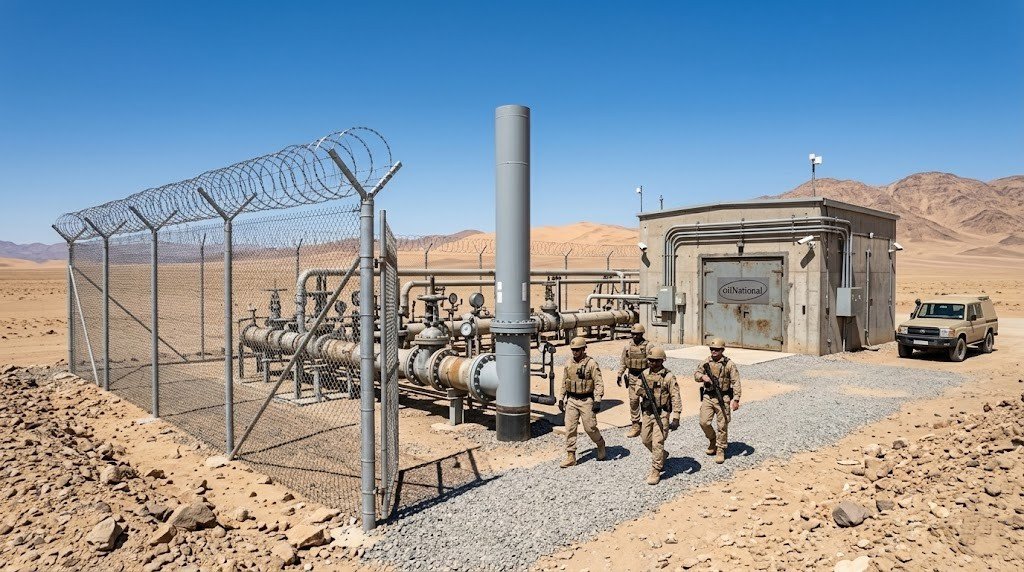
Physical security is paramount for cross-border pipelines, which can stretch for thousands of kilometers through remote and unstable territories. OilNational Group employs a multi-layered security strategy to protect these assets.
Surveillance and Monitoring: We utilize advanced technologies including fiber-optic sensing, drone patrols, and satellite imagery to monitor our pipelines in real time. These systems can detect leaks, third-party interference, or sabotage attempts instantly, allowing for rapid response. Our energy asset management teams operate 24/7 control centers that coordinate with local security forces.
Community Engagement as Defense: The most effective security measure is often social. By employing local communities for pipeline monitoring and maintenance, we create a network of eyes and ears on the ground. When locals benefit economically from the pipeline’s safe operation, they become its fiercest protectors. OilNational Group invests heavily in community development programs along our corridors, turning potential adversaries into allies.
Hardening Assets: Critical nodes like pumping stations and valve sites are hardened against physical attacks. We employ blast-resistant construction, redundant power systems, and armed security details. In high-risk zones, we bury pipelines deeper and use reinforced casing to withstand small arms fire or excavation attempts.

Economic Models: Tolling vs. Merchant
The financial structure of cross-border pipelines varies based on risk appetite and market dynamics.
Tolling Models: Most modern pipelines operate on a tolling basis, charging a fixed fee per barrel transported. This model provides predictable, inflation-linked cash flows that are largely immune to oil price volatility. It is the preferred structure for institutional investors seeking bond-like yields. OilNational Group prioritizes tolling agreements with take-or-pay clauses, ensuring revenue visibility even if volumes fluctuate.
Merchant Models: In some cases, we may retain merchant exposure, buying oil at one end and selling it at the other. This captures the full price differential but exposes the investor to market risk. We typically limit merchant exposure to short-term opportunities or use hedging instruments to lock in margins. Our oil trading and sourcing division manages these positions, leveraging our market intelligence to maximize spreads.
Equity Participation: Often, we take equity stakes in the pipeline entity itself, allowing us to benefit from both toll revenues and potential appreciation in the asset’s value. This alignment of interests ensures that all partners are focused on maximizing throughput and operational efficiency.
Case Study: The Central Asian Corridor
A defining moment in OilNational Group’s history was the development of the Central Asian Corridor in the early 2000s. The project aimed to connect landlocked Caspian reserves to Mediterranean markets, traversing three countries with complex historical tensions.
The Challenge: Previous attempts had failed due to disagreements over transit fees and route security. The region was plagued by instability, and investors were wary of expropriation risks.
The Solution: OilNational Group orchestrated a multilateral framework involving the host governments, the European Bank for Reconstruction and Development (EBRD), and major insurance underwriters. We negotiated a transit agreement that indexed fees to inflation and included international arbitration clauses. On the ground, we implemented a comprehensive community engagement program, hiring thousands of locals for construction and security.
The Outcome: The pipeline was completed on time and has operated safely for over two decades. It delivers 1 million barrels per day to global markets, generating billions in revenue for the transit countries and substantial returns for our investors. The project stands as a benchmark for how diplomatic ingenuity and operational excellence can overcome geopolitical hurdles.
The Future of Energy Corridors
As the global energy landscape evolves, the role of cross-border pipelines will adapt but remain critical.
Hydrogen and CO2 Repurposing: Existing natural gas pipelines can potentially be repurposed for hydrogen or carbon dioxide transport. OilNational Group is already studying the feasibility of converting sections of our network to carry green hydrogen, future-proofing our assets for the low-carbon economy. The OilNational Token ($ONT) could facilitate the tracking and trading of these new energy commodities, ensuring transparency in their origin and carbon intensity.
Digitalization of Transit: Blockchain technology can streamline customs clearance, tariff payments, and volume verification across borders. By implementing smart contracts, we can reduce administrative friction and enhance trust between transit nations. This digital layer adds efficiency and reduces the risk of disputes.
Conclusion: The Arteries of Global Stability
Cross-border pipelines are more than just steel tubes; they are the foundations of energy security and economic integration. Investing in these corridors requires a unique blend of diplomatic savvy, security expertise, and financial discipline. OilNational Group has mastered this complex discipline, delivering resilient assets that generate value regardless of market cycles.
Our $60 billion portfolio includes some of the world’s most strategic energy corridors, secured by robust treaties and deep community ties. For institutional investors, these assets offer a rare combination of stability, yield, and geopolitical significance. As the world continues to rely on the efficient movement of energy, the owners of the corridors will remain the gatekeepers of global prosperity. With OilNational Group as your partner, you can invest in these vital links with confidence, knowing that your capital is protected by the highest standards of security and diplomacy. The future of energy is connected, and we are building the bridges.