In the global energy landscape, the most prolific reserves are rarely open to simple commercial acquisition. They are guarded by National Oil Companies (NOCs) and state ministries that view hydrocarbon resources as strategic national assets. For private institutional capital, direct access to these prizes has historically been limited. However, a sophisticated evolution in deal structuring—the co-investment model—is dismantling these barriers. By aligning private capital efficiency with sovereign strategic interests, firms can secure exclusive access to giant fields, share risks, and participate in value chains previously closed to foreign entities. This is not merely a partnership; it is a diplomatic and financial fusion that defines the future of large-scale energy development.
At OilNational Group, our ability to navigate this complex interface between private equity and state sovereignty has been a cornerstone of our expansion since our 1989 founding in Washington, D.C. Managing over $60 billion in assets across 117+ countries, we have structured landmark joint ventures with NOCs in the Middle East, Africa, and Latin America. Our cumulative growth of 6000% reflects the power of these alliances, where our technological expertise and capital discipline complement the host nation’s resource endowment and political mandate. This analysis explores the architecture of sovereign co-investment, detailing how a global energy investment company builds trust, mitigates political risk, and unlocks superior returns through shared ownership.
We examine the mechanics of Production Sharing Contracts (PSCs), the role of bilateral treaties in securing investments, and the strategic imperatives for aligning with state objectives. In an era of resource nationalism, the partner who offers more than just capital will win the race for reserves.
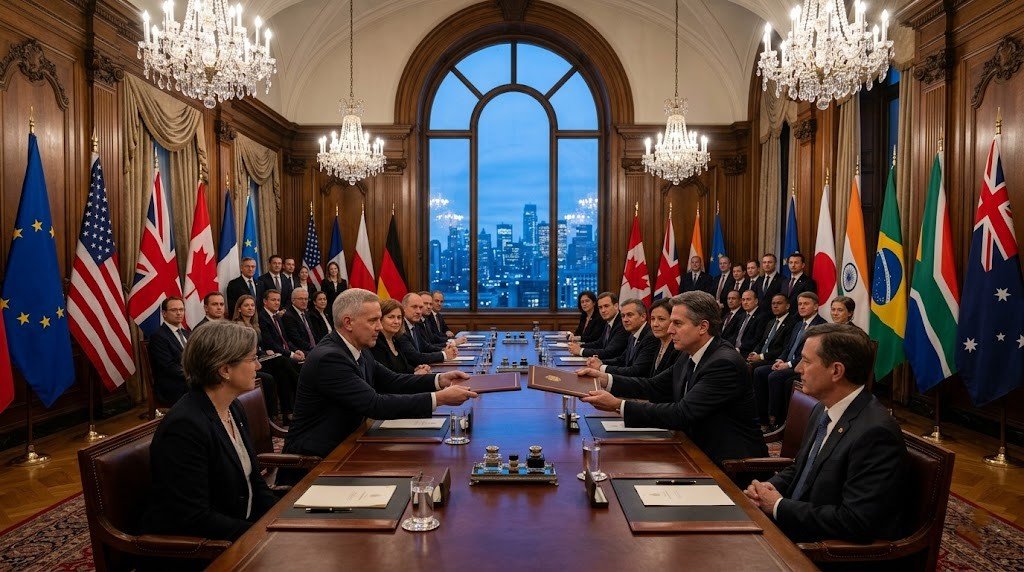
The Strategic Imperative for Co-Investment
Why do sovereign states seek private partners, and why do private firms seek sovereigns? The answer lies in the complementary nature of their needs and capabilities.
For the Host Nation (NOC):
- Capital Efficiency: Developing giant fields requires billions in upfront investment. Co-investment allows NOCs to develop reserves without over-leveraging their national balance sheets.
- Technology Transfer: Private firms like OilNational Group bring advanced technologies (EOR, digital twins, deepwater drilling) that NOCs may lack. Partnerships facilitate the transfer of this know-how to the local workforce.
- Risk Sharing: Exploration and development carry significant geological and market risks. Sharing these risks with private partners protects the state’s revenue stream from volatile shocks.
- Speed to Market: Private operators often execute projects faster than state bureaucracies, accelerating revenue generation for the national treasury.
For the Private Investor:
- Access to Reserves: Co-investment is often the only gateway to Tier-1 assets in resource-rich jurisdictions.
- Political Risk Mitigation: Having the NOC as a majority partner or equal joint venturer provides a “political shield.” The state has a vested interest in the project’s success, reducing the risk of expropriation or adverse regulatory changes.
- Infrastructure Synergies: NOCs control existing infrastructure (pipelines, ports, refineries). Partnering allows private firms to leverage these assets, lowering logistical costs.
- Long-Term Stability: State-backed projects often enjoy long-duration contracts and stable fiscal regimes, providing predictable cash flows ideal for institutional portfolios.
Structuring the Deal: Models of Engagement
There is no one-size-fits-all model for co-investment. OilNational Group tailors structures to align incentives and manage risk effectively.
Production Sharing Contracts (PSCs): Common in Africa, Asia, and Latin America, PSCs allow the private investor to recover costs from a portion of production (“cost oil”) and share the remaining “profit oil” with the NOC. This model aligns interests: both parties benefit from maximizing production efficiency. We negotiate sliding scales where the investor’s share increases with higher production volumes or prices, incentivizing performance.
Joint Ventures (JVs): In JVs, the private firm and the NOC create a separate legal entity, contributing capital and assets in agreed proportions (e.g., 40/60 or 50/50). Profits and losses are shared according to equity stakes. This model offers deeper integration and shared governance. OilNational Group often secures operatorship in these JVs, leveraging our energy asset management expertise to drive efficiency while respecting the NOC’s strategic oversight.
Service Contracts with Equity Upside: In some jurisdictions, foreign ownership of reserves is prohibited. Here, we structure technical service contracts where we are paid a fee per barrel produced. To capture upside, we negotiate equity kickers or warrants that grant us a stake in the broader field or related downstream assets if performance targets are exceeded.
Farm-In Agreements: We often “farm in” to existing NOC projects by funding a portion of the development costs in exchange for a working interest. This allows us to bypass early exploration risk and enter at the development stage with clear reserve definitions.
Navigating the Political Landscape
Success in sovereign partnerships requires more than financial engineering; it demands diplomatic acumen and cultural intelligence.
Aligning with National Agendas: Every NOC operates within a national development plan. OilNational Group takes the time to understand these goals—whether it’s job creation, local content development, or energy security—and structures our proposals to support them. By positioning ourselves as enablers of national prosperity, we build enduring relationships that transcend political cycles.
Bilateral Investment Treaties (BITs): To further secure our investments, we ensure our projects are covered by BITs between the host country and major economic powers. These treaties provide international legal recourse in case of dispute, adding a layer of protection beyond local law. Our legal team works tirelessly to embed these protections into every co-investment framework.
Local Content and Capacity Building: A critical component of our social license to operate is our commitment to local content. We prioritize hiring and training local nationals, transferring skills, and sourcing goods and services locally. In many of our African and Asian JVs, over 80% of the workforce is local. This investment in human capital fosters community support and political goodwill, insulating the project from populist backlash.

Risk Management in Sovereign Partnerships
While co-investment mitigates many risks, it introduces others that must be managed carefully.
Governance and Decision-Making: Differences in corporate culture and decision-making speeds between private firms and state entities can lead to friction. We address this by establishing clear governance charters in the JV agreement, defining voting rights, board composition, and escalation mechanisms. Regular steering committee meetings ensure alignment and rapid resolution of issues.
Fiscal Stability: Changes in tax laws or royalty regimes can impact project economics. We negotiate stabilization clauses that freeze the fiscal regime at the time of signing or provide compensation for adverse changes. Additionally, we diversify our portfolio across multiple jurisdictions to avoid over-concentration in any single regulatory environment.
Corruption and Compliance: Operating in close proximity to state entities requires rigorous adherence to anti-corruption laws (e.g., FCPA, UK Bribery Act). OilNational Group maintains a zero-tolerance policy, implementing strict compliance protocols, third-party audits, and transparent reporting. Our reputation for integrity is a key asset in winning and maintaining sovereign trust.
Case Study: The West African Deepwater Alliance
A defining example of our success is the Deepwater Alliance formed with a major West African NOC in 2018. The target was a massive offshore block that had stalled for a decade due to capital constraints and technical complexity.
The Challenge: The NOC lacked the capital for deepwater development and the technology for ultra-deep drilling. Previous international partners had withdrawn due to perceived political risk.
The Solution: OilNational Group proposed a 50/50 JV structure where we funded 100% of the initial development costs in exchange for a carried interest until payout. We committed to a comprehensive local content program, building a regional training center for subsea engineering. Crucially, we secured backing from the US International Development Finance Corporation (DFC), adding multilateral weight to the project.
The Outcome: The field came online two years ahead of schedule, becoming the country’s largest producing asset. The NOC received record royalties, thousands of jobs were created, and OilNational Group achieved an IRR of over 35%. The partnership has since expanded to three additional blocks, cementing our status as a preferred partner in the region.

The Role of Digital Transparency
Trust is the currency of sovereign partnerships. OilNational Group leverages technology to enhance transparency and build confidence.
Shared Data Platforms: We implement secure, cloud-based data rooms where the NOC and private partner can access real-time production data, financial reports, and operational metrics. This eliminates information asymmetry and fosters a culture of openness.
Blockchain for Revenue Tracking: In some JVs, we are piloting blockchain solutions to track revenue flows from the wellhead to the treasury. Smart contracts automatically distribute profits according to the agreed formula, ensuring timely and accurate payments. This technological layer reduces disputes and enhances trust between parties. The OilNational Token ($ONT) framework could eventually facilitate these transparent settlement mechanisms across our global network.
Conclusion: The Power of Partnership
In the complex geopolitics of energy, isolation is a strategy for decline. The future belongs to those who can build bridges between private capital and sovereign ambition. Co-investment models offer a pathway to access the world’s greatest reserves while sharing risks and rewards equitably.
OilNational Group has mastered this art, forging alliances that deliver value to investors and host nations alike. Our $60 billion portfolio is a testament to the strength of these partnerships. By aligning our expertise with national goals, we create projects that are not only profitable but also politically resilient and socially beneficial.
For institutional investors, the lesson is clear: the most lucrative opportunities in energy are found in collaboration. By partnering with a firm that understands the nuances of sovereign engagement, you can access a world of opportunity that remains closed to others. As the demand for energy grows, the alliances we build today will power the world tomorrow. With OilNational Group, you are not just investing in oil; you are investing in the diplomatic and strategic frameworks that make energy possible.