The global financial architecture is undergoing a silent but profound transformation. As institutional capital seeks yield in an era of macroeconomic uncertainty, a new class of hybrid instruments has emerged at the intersection of physical commodity markets and distributed ledger technology. Oil-backed digital instruments represent the evolution of the traditional commodity warrant, merging the intrinsic stability of hydrocarbon reserves with the settlement efficiency and transparency of blockchain protocols. For the sophisticated investor, these instruments offer a mechanism to gain exposure to the energy sector’s fundamental value without the operational burdens of direct ownership or the counterparty risks of unbacked paper derivatives.
At OilNational Group, our entry into this domain is driven by three decades of operational mastery. Since our founding in Washington, D.C. in 1989, we have managed over $60 billion in physical assets across 117+ countries. Our approach to digital instruments is not speculative; it is structural. We view tokens like the OilNational Token ($ONT) not as cryptocurrencies, but as structured digital investment representations of verified, cash-flowing upstream and midstream assets. This analysis provides a rigorous examination of the legal and financial architecture underpinning oil-backed digital instruments, dissecting their risk profiles, liquidity mechanics, and strategic role in a diversified institutional portfolio.
We move beyond the hype of retail crypto to focus on the hard realities of asset backing, regulatory compliance, and the specific opportunities these instruments present for energy asset management in a digitized global economy.
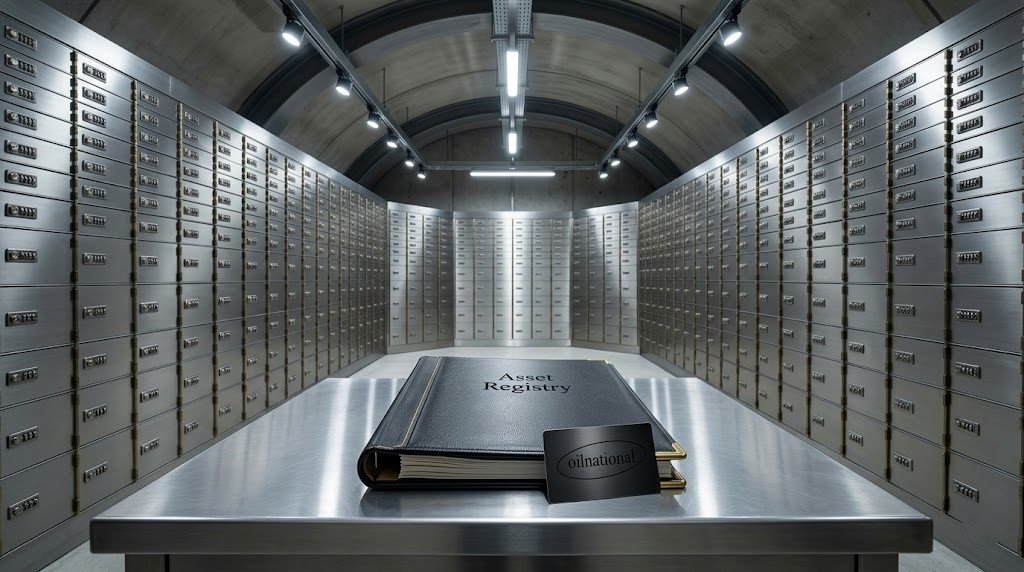
Structural Architecture: Bridging Physical and Digital
The integrity of any oil-backed digital instrument relies entirely on the robustness of the legal and operational bridge connecting the digital token to the physical asset. Unlike algorithmic stablecoins or utility tokens with vague promises of value, a legitimate oil-backed instrument must possess a direct, enforceable claim on real-world production or reserves.
The Special Purpose Vehicle (SPV) Framework: The foundational layer is the legal structure. Typically, a dedicated SPV is established in a jurisdiction with strong property laws and favorable tax treaties. This SPV holds title to the specific oil assets—whether a producing well, a pipeline segment, or a storage terminal. The digital tokens issued are then legally defined as equity shares or debt notes of this SPV. This ensures that token holders are not merely holding a digital receipt but are beneficial owners of the underlying entity. OilNational Group utilizes this model for $ONT, ensuring that every token in circulation corresponds to a verified slice of our $60 billion physical portfolio.
Asset Verification and Custody: Trust is established through rigorous third-party verification. Before any tokenization occurs, independent engineering firms conduct reserve audits (following SPE-PRMS standards), and legal counsel confirms clear title. These reports are hashed and anchored to the blockchain, creating an immutable timestamp of the asset’s status. Furthermore, the physical assets remain under the operational custody of experienced managers like OilNational Group, ensuring that production continues efficiently and revenues are collected reliably. This separation of digital ownership and physical management allows investors to benefit from professional energy asset management without needing operational expertise.
Smart Contract Logic: The digital layer is governed by smart contracts that automate key financial functions. Revenue generated from oil sales is converted to stablecoins or fiat and automatically distributed to token holders’ wallets based on their pro-rata share. Compliance rules, such as transfer restrictions to ensure only accredited investors hold the tokens, are encoded directly into the contract. This automation reduces administrative friction, eliminates intermediary delays, and ensures that the flow of value from the physical well to the digital wallet is seamless and transparent.
Risk Profile Analysis
While oil-backed digital instruments offer compelling advantages, they carry a unique risk profile that differs from both pure physical assets and pure digital assets. Institutional investors must understand these nuances to allocate capital effectively.
Asset Performance Risk: The primary risk remains the performance of the underlying oil asset. Production declines, unexpected maintenance costs, or local geopolitical disruptions can impact cash flows. However, this risk is mitigated by diversification. The OilNational Token ($ONT), for instance, is backed by a pooled portfolio of assets across multiple geographies and value chain segments. If one well underperforms, others in the pool can compensate, smoothing out the overall yield. This diversification is a core tenet of our oil and gas investment firm strategy.
Regulatory and Legal Risk: The regulatory landscape for digital securities is evolving. Changes in securities laws, tax treatments, or anti-money laundering requirements in key jurisdictions could impact the tradability or structure of these instruments. OilNational Group mitigates this by engaging proactively with regulators, adhering to the highest compliance standards globally, and structuring our offerings to be adaptable to changing rules. We operate under the assumption that regulation will tighten, not loosen, and our frameworks are built to exceed current requirements.
Technology and Cybersecurity Risk: While the physical asset is immune to hacking, the digital layer is not. Risks include smart contract bugs, private key loss, or exchange breaches. To address this, we utilize enterprise-grade blockchain platforms with proven security track records, employ multi-signature wallet structures for treasury management, and encourage investors to use institutional-grade custody solutions. Regular third-party security audits of our smart contracts are mandatory before any deployment.
Liquidity Risk: Although tokenization improves liquidity compared to traditional private equity, secondary markets for security tokens are still maturing. Investors may not be able to exit positions instantly at fair market value during periods of stress. It is crucial to view these instruments as medium-to-long-term holdings. The structured digital investment representation offers better liquidity than a direct LP interest, but it does not match the immediacy of a public stock exchange.

The Opportunity Set for Institutional Capital
Despite the risks, the opportunity presented by oil-backed digital instruments is transformative for institutional portfolios. They solve several structural inefficiencies that have long plagued energy investing.
Democratization of Access: Traditionally, direct investment in high-quality oil assets required minimum commitments of $10 million or more, limiting access to the largest sovereign funds and pension plans. Tokenization fractionalizes these assets, lowering minimums to levels accessible by smaller family offices and specialized funds. The OilNational Token ($ONT), with a $10,000 entry point, opens this exclusive asset class to a broader base of qualified capital without diluting the quality of the underlying investments.
Enhanced Transparency and Auditability: In traditional private funds, investors often rely on quarterly reports that may lag reality. Blockchain-based instruments provide real-time visibility. Production data, sales receipts, and distribution events are recorded on a public or permissioned ledger, allowing investors to verify performance independently. This transparency reduces information asymmetry and builds deeper trust between the manager and the investor.
Operational Efficiency and Cost Reduction: The automation of administrative tasks via smart contracts significantly reduces overhead. Manual processes for subscriptions, capital calls, and distributions are replaced by code, cutting costs and errors. These savings enhance the net return to investors. For a global energy investment company managing complex cross-border flows, this efficiency is a competitive advantage that scales with asset size.
Portfolio Diversification: Oil-backed digital instruments offer a unique correlation profile. Their value is tied to physical energy markets, which often move independently of equities and bonds. Adding these instruments to a portfolio can reduce overall volatility and improve risk-adjusted returns. Furthermore, the ability to access assets in diverse geographic regions through a single digital interface simplifies global diversification strategies.
Comparative Analysis: Digital vs. Traditional Structures
To fully appreciate the value proposition, it is useful to compare oil-backed digital instruments against traditional investment vehicles.
| Feature | Oil-Backed Digital Instrument | Traditional Private Equity Fund | Public Energy ETF/Stock |
|---|---|---|---|
| Underlying Asset | Direct claim on specific physical assets | Limited Partnership interest in a fund | Equity in a corporation or futures contracts |
| Transparency | Real-time on-chain data | Quarterly/Lagging reports | Daily mark-to-market (but opaque holdings) |
| Liquidity | Secondary market potential (T+1/T+2) | Locked up (5-10 years) | Daily (T+2) |
| Minimum Investment | Low ($10k – $100k) | High ($1M – $10M+) | Very Low (Share price) |
| Fee Structure | Transparent, lower admin costs | High management + performance fees | Expense ratio + hidden roll costs |
| Settlement | Minutes/Hours | Days/Weeks | Days |
| Control | Smart contract enforced | GP discretion | Market force |
This comparison highlights that digital instruments occupy a “goldilocks” zone: offering the asset backing of private equity with improved liquidity and transparency, while avoiding the speculative disconnect of public paper markets.
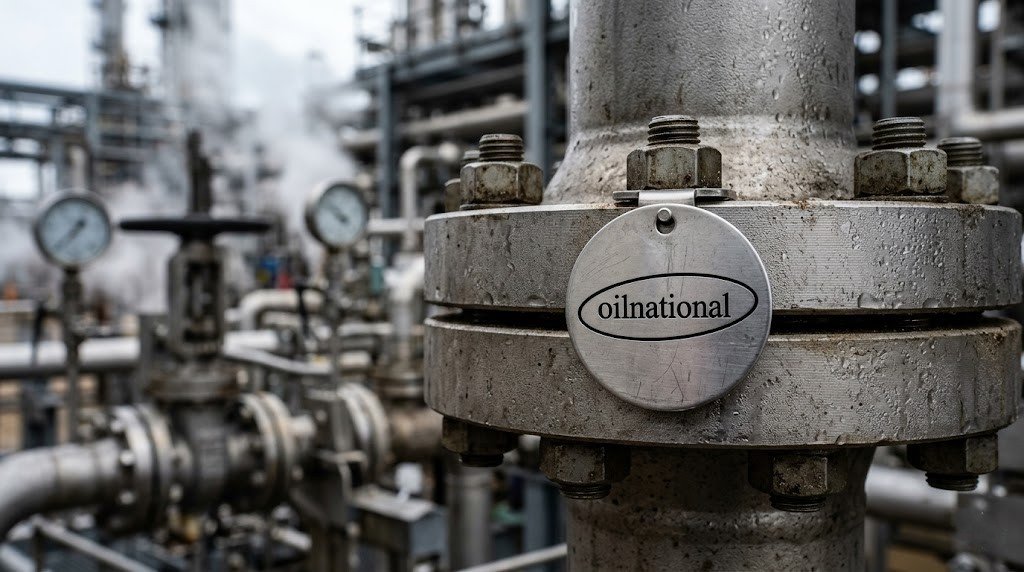
The Future Landscape: Integration and Standardization
As the market matures, we anticipate greater standardization of legal frameworks and technical protocols for oil-backed digital instruments. Industry consortia will likely emerge to define best practices for asset verification, smart contract auditing, and cross-chain interoperability.
Institutional Adoption: Major custodians, prime brokers, and clearinghouses are beginning to build infrastructure to support security tokens. As these traditional pillars of finance integrate digital assets, the friction for institutional adoption will vanish. OilNational Group is already positioning itself to interoperate with these emerging systems, ensuring our instruments remain compatible with the evolving financial ecosystem.
Regulatory Clarity: We expect regulators to provide clearer guidelines, distinguishing between compliant security tokens and speculative crypto assets. This clarity will unlock significant capital from institutions that have been waiting on the sidelines. Our proactive compliance stance positions us to lead in this regulated environment.
Technological Evolution: Advancements in zero-knowledge proofs and layer-2 scaling solutions will further enhance privacy and throughput, making these instruments even more efficient and secure. The integration of IoT sensors with blockchain ledgers will allow for real-time, automated verification of physical production data, closing the loop between the physical and digital worlds.
Conclusion: A New Standard for Energy Investment
Oil-backed digital instruments represent more than a technological novelty; they are a structural upgrade for the global energy investment industry. By anchoring digital value in physical reality, we create a vehicle that combines the best attributes of tangible assets and modern finance.
For OilNational Group, the OilNational Token ($ONT) is the embodiment of this vision. It leverages our $60 billion physical footprint and 34 years of expertise to offer investors a secure, transparent, and efficient path to energy exposure. As the market evolves, these instruments will likely become the standard for institutional participation in the oil and gas sector.
The opportunity is clear: to harness the stability of the world’s most critical commodity while utilizing the speed and transparency of the digital age. For forward-thinking institutions, the time to explore this hybrid asset class is now. The future of energy finance is not just digital, and not just physical; it is the seamless integration of both.