As the global economy navigates the complex transition from high-carbon fuels to renewable energy, one commodity has emerged as the indispensable bridge: natural gas. Cleaner burning than coal and more flexible than intermittent renewables, natural gas is projected to see demand growth well into the 2040s, driven by power generation in Asia and industrial heating in Europe. However, the value of this resource is locked behind a critical bottleneck: logistics. The ability to liquefy, transport, and regasify natural gas via Liquefied Natural Gas (LNG) infrastructure is the key to unlocking global markets. For institutional investors, this creates a unique opportunity to deploy capital into high-yield, long-life assets that are essential to global energy security.
At OilNational Group, our strategic pivot toward LNG infrastructure over the last decade has been a primary driver of our portfolio’s resilience. Founded in Washington, D.C. in 1989, we now manage over $60 billion in assets across 117+ countries. Our cumulative growth of 6000% reflects not just our upstream prowess but our dominance in the midstream corridors that move energy from source to consumer. This analysis explores the investment thesis for LNG infrastructure, focusing on Floating Storage Regasification Units (FSRUs), export terminals, and the strategic geography of trade flows. We examine how a global energy investment company leverages these assets to generate stable, inflation-linked cash flows while supporting the global decarbonization agenda.
In an era where energy independence is paramount, owning the infrastructure that enables the flow of natural gas is akin to owning the toll roads of the 21st century.
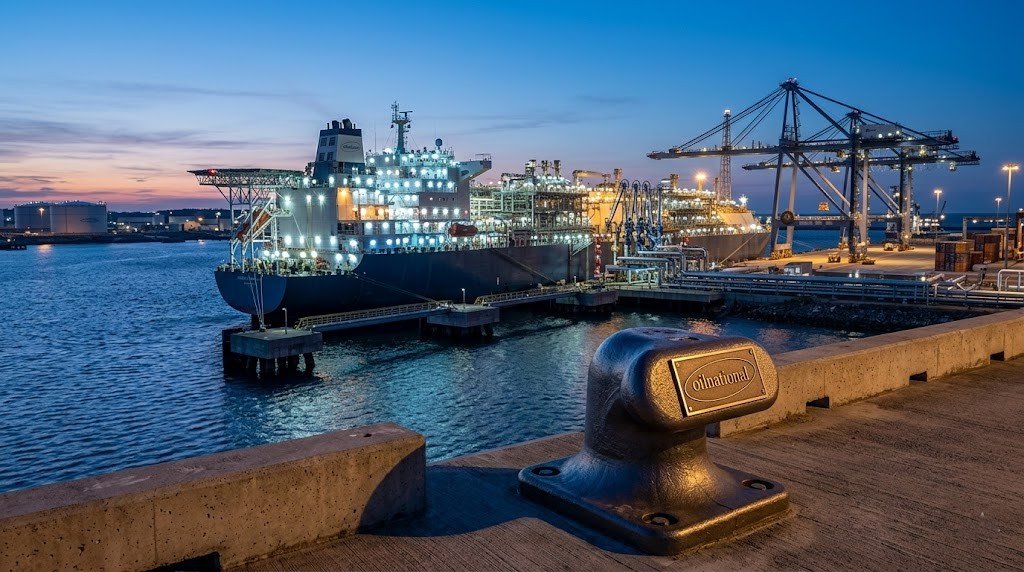
The Macro-Economic Case for Natural Gas
The argument for natural gas as a “bridge fuel” is grounded in hard data and geopolitical necessity. While renewables are scaling rapidly, they cannot yet provide the baseload reliability required by modern industrial economies.
Demand Dynamics in Asia: Asia remains the epicenter of LNG demand growth. Nations like China, India, Pakistan, and Bangladesh are aggressively shifting from coal to gas to meet air quality targets and rising electricity needs. Unlike pipeline gas, which is geographically constrained, LNG can be shipped from anywhere to anywhere, making it the preferred choice for import-dependent nations. OilNational Group has strategically positioned assets in Southeast Asia and the Indian Ocean to serve this insatiable demand, securing long-term off-take agreements that guarantee revenue visibility.
Energy Security in Europe: The geopolitical shocks of the early 2020s fundamentally altered Europe’s energy landscape. severed pipeline ties with traditional suppliers forced a rapid build-out of LNG import capacity. Countries that previously relied on piped Russian gas are now constructing FSRUs and permanent terminals at record speed. This structural shift has created a sustained premium for LNG cargoes and a shortage of regasification capacity, driving up tariffs and utilization rates for asset owners. Our European portfolio has expanded to capitalize on this urgent need for diversification and security.
The Intermittency Solution: As wind and solar penetration increases, the grid requires flexible backup power. Natural gas turbines can ramp up and down quickly, balancing the grid when renewables falter. This role ensures that gas demand will remain robust even as the share of renewables grows. Investing in the infrastructure that supports this flexibility—storage, liquefaction, and transport—is a bet on the stability of the future grid itself.
Asset Classes: Where Capital Deploys
Not all LNG infrastructure offers the same risk-return profile. OilNational Group focuses on three specific asset classes that offer the best balance of yield, security, and growth potential.
Floating Storage Regasification Units (FSRUs): FSRUs are specialized vessels that can receive, store, and regasify LNG, delivering it directly into a national grid. They are the “speed-to-market” solution, capable of being deployed in 12-18 months compared to the 5-7 years required for onshore terminals. With daily charter rates reaching historic highs, FSRUs offer attractive, short-to-medium term yields. OilNational Group owns and operates a fleet of FSRUs stationed in key hubs like Egypt, Pakistan, and Germany, capturing premium spot and medium-term rates.
Liquefaction Export Terminals: On the supply side, liquefaction plants in North America, Africa, and Australia convert gas into liquid for export. These are capital-intensive, long-life assets that typically operate under 20-year tolling agreements. The revenue model is fee-based, insulated from commodity price volatility. Our investments in Mozambique and the US Gulf Coast provide stable, bond-like cash flows that form the defensive core of our portfolio.
Small-Scale LNG and Bunkering: A nascent but rapidly growing segment is small-scale LNG, which serves remote industries and marine bunkering (fueling ships). As maritime regulations tighten (IMO 2020), shipping companies are switching to LNG. OilNational Group is developing a network of small-scale bunkering hubs in major ports like Singapore and Rotterdam, positioning ourselves at the forefront of the green shipping revolution.
The Economics of Tolling and Trading
The financial allure of LNG infrastructure lies in its revenue models, which are often decoupled from the volatile spot price of gas.
Tolling Agreements: Most modern LNG projects operate on a “tolling” basis. The facility owner charges a fixed fee per million British thermal units (MMBtu) processed, regardless of the gas price. This provides predictable, inflation-indexed revenue streams that are highly attractive to pension funds and sovereign wealth funds. OilNational Group structures these deals to include escalators tied to inflation indices, ensuring real returns are preserved over decades.
Merchant Trading Opportunities: While tolling provides stability, there is also significant upside in merchant trading. By owning storage and regasification capacity, we can engage in arbitrage—buying gas when prices are low, storing it, and selling it when prices spike. The volatility of the global LNG market creates frequent dislocations between regions (e.g., Henry Hub in the US vs. TTF in Europe). Our oil trading and sourcing division leverages our infrastructure to capture these spreads, adding an alpha layer to the base yield.
Capacity Scarcity Premium: Currently, global regasification capacity is tight. New entrants face long lead times and regulatory hurdles. Existing assets can command scarcity premiums in the form of higher spot rates or favorable contract terms. OilNational Group’s early mover advantage in key markets allows us to dictate terms, maximizing the return on invested capital.
Geopolitical Strategy and Risk Mitigation
Investing in cross-border energy infrastructure inevitably involves navigating geopolitical complexities. OilNational Group employs a rigorous framework to mitigate these risks.
Diversification of Supply and Demand: We avoid concentration risk by balancing assets across multiple jurisdictions. If demand softens in one region, surplus cargo can be redirected to another. Our presence in 117+ countries allows us to optimize cargo flows dynamically, ensuring high utilization rates regardless of local economic conditions.
Sovereign Partnerships: Many of our projects are structured as joint ventures with state-owned enterprises or national oil companies. These partnerships provide political cover, streamline permitting, and often come with sovereign guarantees. By aligning our interests with those of the host nation, we create a stable operating environment even in volatile regions.
Regulatory Hedging: We actively engage with regulators to shape policies that support LNG development. Our legal team monitors changes in environmental standards, safety codes, and trade tariffs, ensuring our assets remain compliant and competitive. We also utilize political risk insurance to protect against expropriation or contract repudiation.
The Role of Technology and Innovation
Technology is enhancing the efficiency and environmental profile of LNG infrastructure.
Digital Twins and Predictive Maintenance: OilNational Group uses digital twin technology to model our facilities in real time. This allows us to predict equipment failures before they occur, minimizing downtime and optimizing maintenance schedules. The resulting operational efficiency boosts margins and extends asset life.
Carbon Capture Integration: To future-proof our assets, we are integrating carbon capture systems into our liquefaction plants. This reduces the carbon intensity of our LNG, making it more attractive to environmentally conscious buyers in Europe and Asia. The OilNational Token ($ONT) can be used to track and verify these carbon reductions, creating additional value through carbon credits.
Floating Liquefaction (FLNG): For stranded gas reserves where onshore plants are impractical, FLNG technology offers a solution. These floating factories liquefy gas at sea, reducing the need for long pipelines. OilNational Group is evaluating several FLNG opportunities in West Africa and Southeast Asia, which could unlock billions of cubic feet of previously stranded reserves.
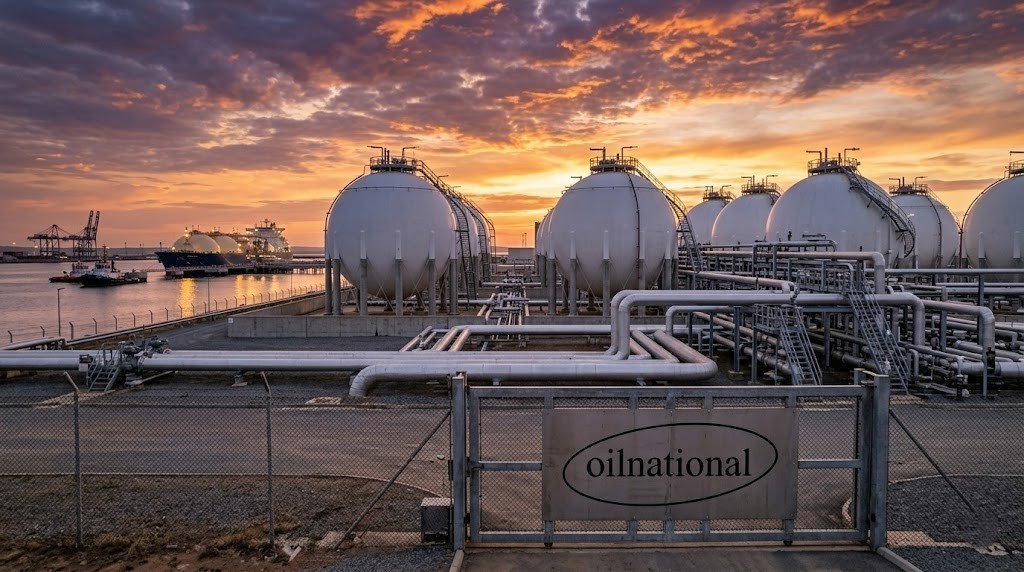
Conclusion: The Bridge to the Future
Natural gas is not merely a transitional fuel; it is a foundational pillar of the future energy mix. As the world seeks to balance energy security, affordability, and sustainability, LNG infrastructure stands out as a critical enabler. For institutional investors, the opportunity to own these assets represents a chance to generate stable, long-term yields while playing a vital role in the global energy transition.
OilNational Group is uniquely positioned to lead this charge. With our $60 billion portfolio, global footprint, and deep expertise in energy asset management, we are building the networks that will power the next generation of economies. From FSRUs in Europe to liquefaction plants in Africa, our assets are the arteries of the global gas market.
The window to invest in prime LNG infrastructure at attractive valuations is open, but it will not remain so forever. As the market matures and capacity tightens, the value of these strategic assets will only appreciate. For the visionary investor, the path forward is clear: secure your position in the bridge fuel of the future today. With OilNational Group as your partner, you can navigate the complexities of this market with confidence, capturing the rewards of a world that increasingly runs on clean, reliable natural gas.